By Foster Team
|
Expressive Arts and Art Therapy: What's the Difference — and Why We Need Both
DrawBridge isn't art therapy. But after 37 years, we've learned that what we do creates something essential that complements the important clinical support that art therapy brings and that the two together are more powerful than either on its own.
One of the most common questions we get is whether DrawBridge provides art therapy. It's a fair question, and the answer matters not simply because of terminology, but because understanding the difference helps explain what we actually do, why it works, and how we're building something new at the intersection.
What Art Therapy Is
Art therapy is a clinical practice. It's delivered by licensed or credentialed professionals art therapists who hold graduate degrees and supervised clinical hours. It involves assessment, treatment planning, and therapeutic goals. It's grounded in the relationship between a client and a clinician, and it's designed to address specific psychological, emotional, or developmental needs.
Art therapy is powerful, necessary work. And for many of the children we serve, children experiencing housing instability, family disruption, and the accumulated weight of adverse childhood experiences access to that kind of clinical support can be life-changing.
But here's what we've observed over 37 years: most of the children in our programs don't have access to it. Waitlists for mental health services are long. Shelter settings are stretched thin. And even when clinical support is available, many children aren't ready for a therapeutic relationship with a stranger in an office. They need something else first.
What DrawBridge Does
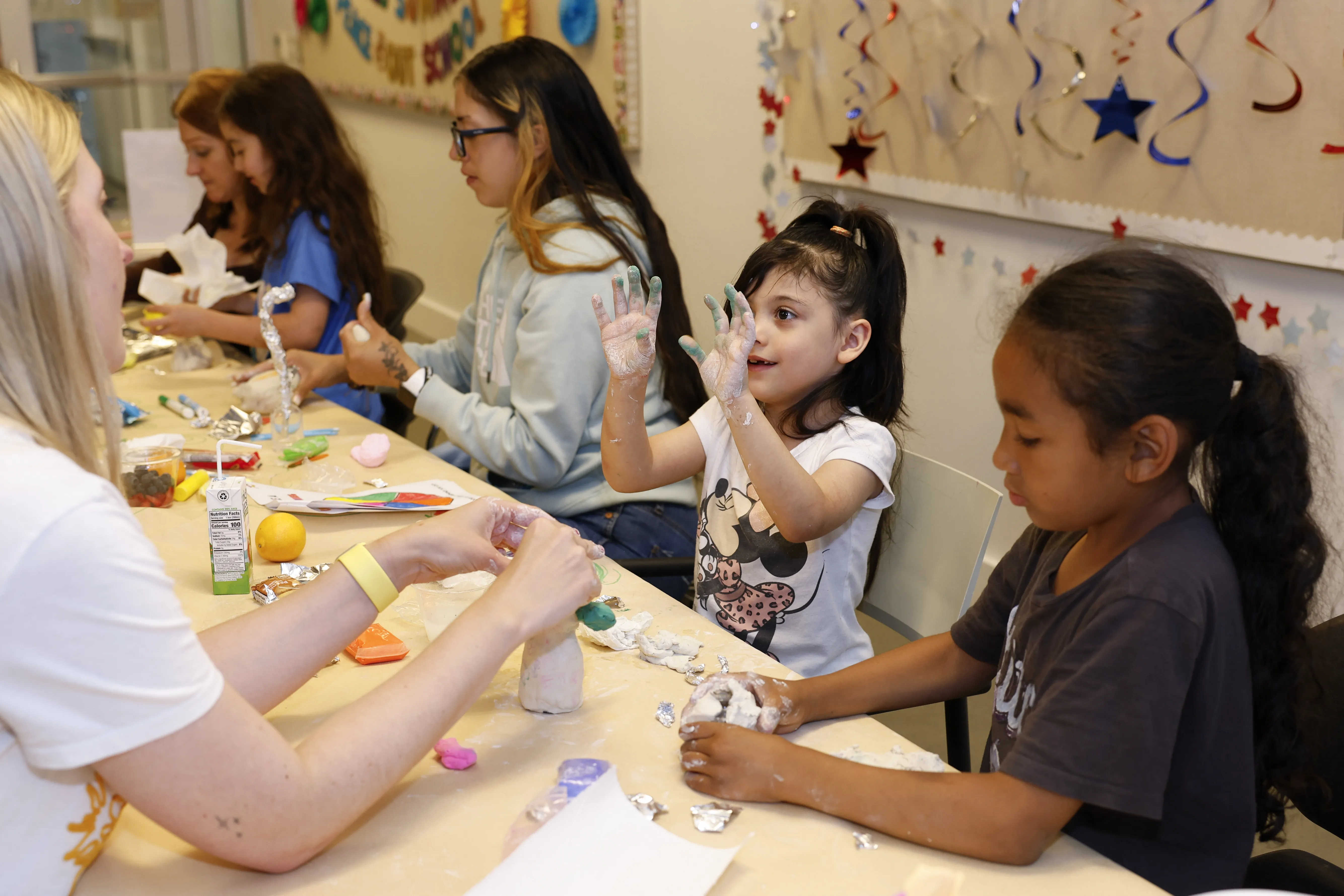
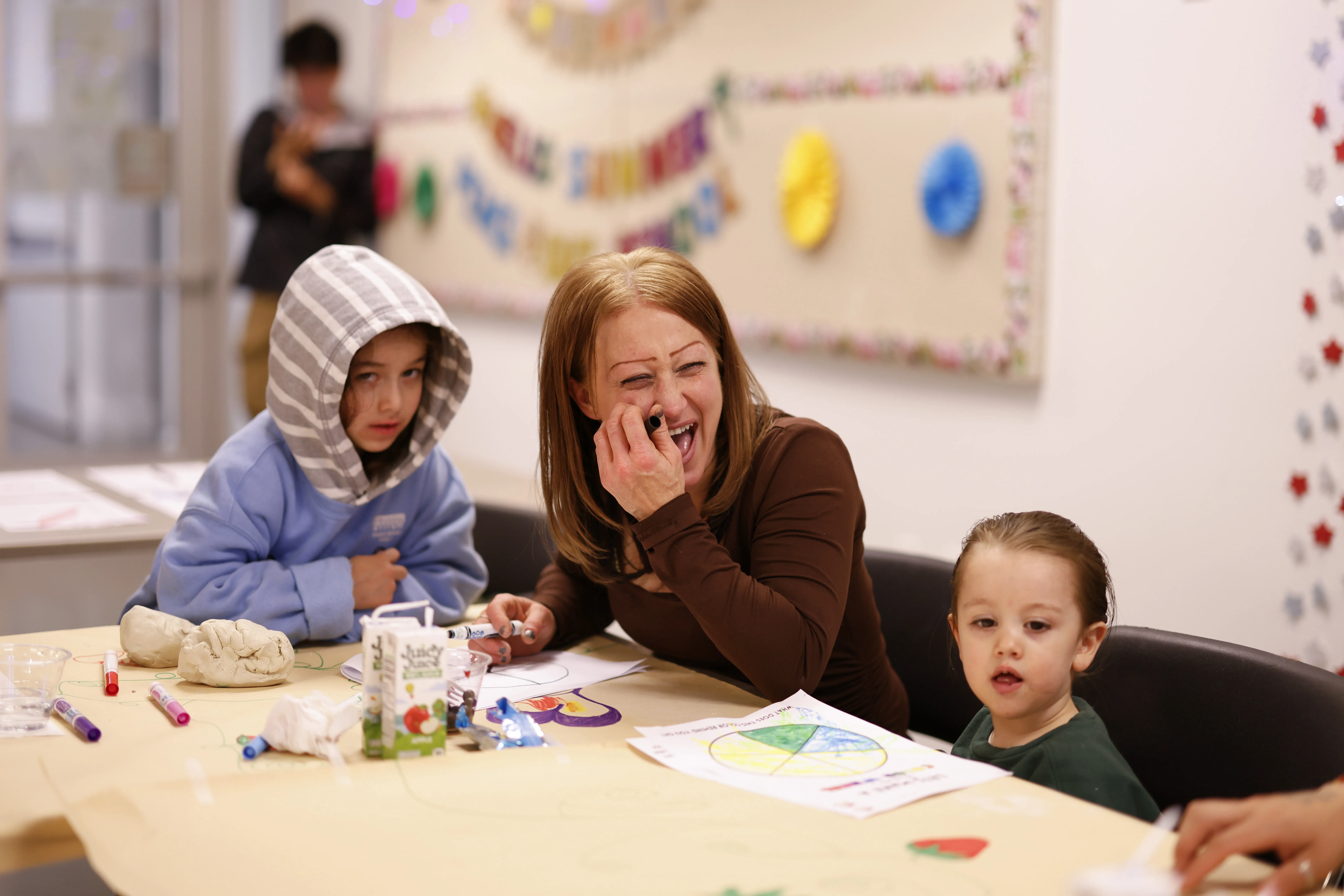
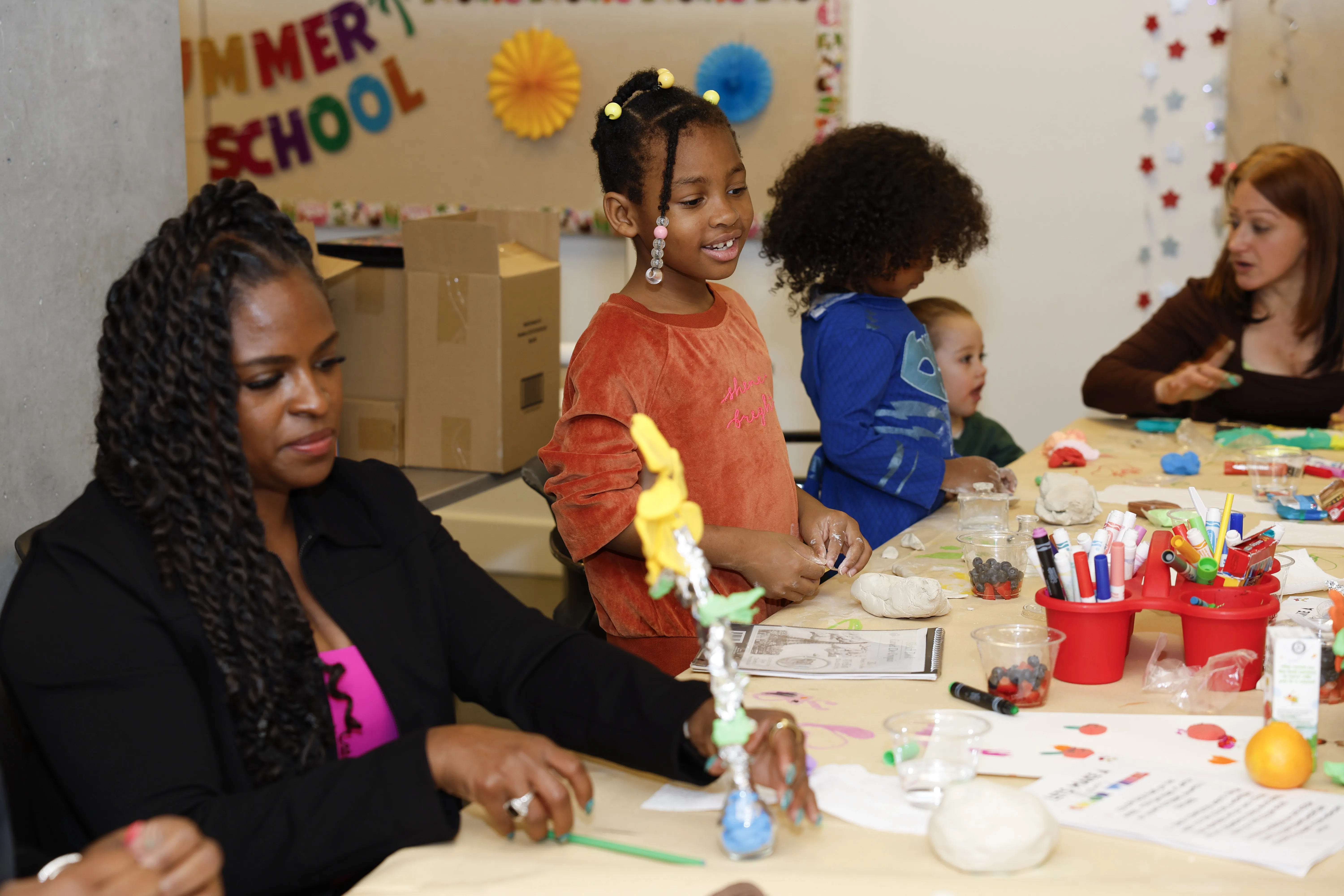
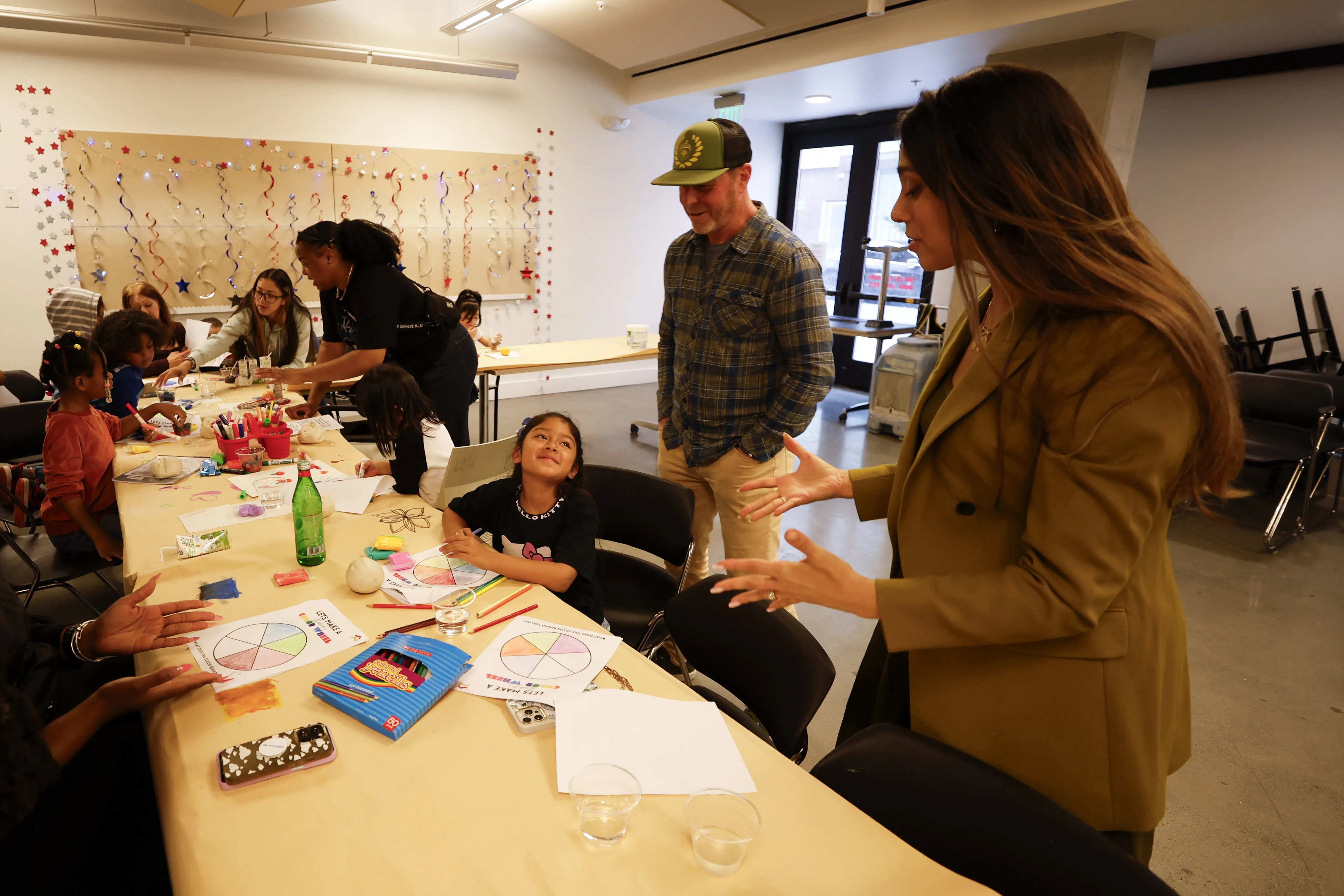
DrawBridge provides free, trauma-informed expressive arts programming. That means we create consistent, safe, creative spaces, in shelters, transitional housing, affordable housing, and community centers, where children can show up and express themselves through art. No intake forms. No treatment plans. No clinical framing. Just a trained facilitator who arrives every week with high-quality materials and a developmentally appropriate art prompt, and an hour where children can be children.
Our facilitators are grounded in trauma-informed practices, but they are not clinicians. They're skilled, compassionate adults who understand how to hold space for children navigating difficult circumstances, how to offer choice without pressure, how to follow a child's lead, how to be a consistent presence in a life full of disruption.
This is what we mean when we say our work is art therapy adjacent. We're deeply informed by the principles of trauma-informed care. We understand the research on adverse childhood experiences and toxic stress. Our art prompts are designed by art therapists. But we operate in a different space, one that's community-based, process-centered, and grounded in the belief that consistent creative expression is its own form of care.
Why the Distinction Matters
It would be easy to blur the line. "Art therapy" is a term people recognize, and it carries weight with funders and partners. But we've chosen to be precise about this, because the distinction actually reveals something important about what children need.
Not every child in a shelter needs a therapist. But every child in a shelter deserves a consistent, safe space to create. A place where they're seen and supported. A weekly rhythm that doesn't disappear when funding cycles shift or caseloads grow. That's what DrawBridge provides, and it's something that clinical models, by design, aren't built to deliver at this scale or in this way.
Expressive arts and art therapy serve different purposes. They complement each other. One doesn't replace the other. And when they work together, something remarkable happens.
A Bridge to Deeper Support: Our Dominican University Partnership
This is where our partnership with Dominican University of California comes in, and it's one of the most exciting (and long-awaited) developments in DrawBridge's history.
Through a formal agreement with Dominican's graduate art therapy program, we're piloting a partnership that works on two levels at once.
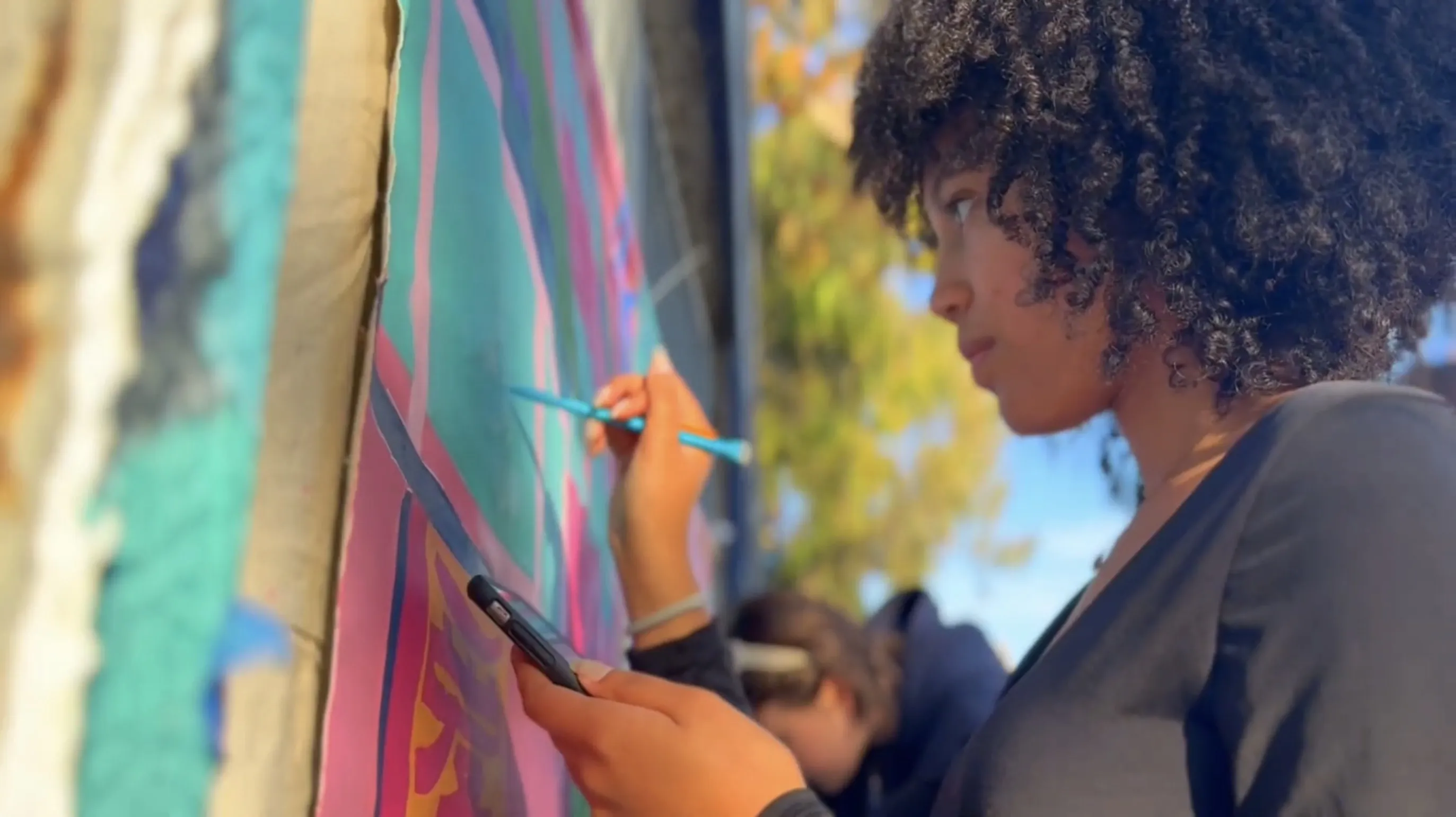
During our programming, the graduate students serve as highly skilled, trauma-informed volunteers alongside our facilitators. They understand child development, creative process, and how to hold safe space, which means our children get an additional caring, trained adult in the room every session. At the same time, these students bring a deeply knowledgeable trauma-informed lens to our environments. They conduct structured observations that help us understand and evaluate the trauma-informed conditions we're creating, not just whether children are attending, but what's actually happening in those rooms. A child who starts making eye contact after weeks of silence, or a teenager who takes a creative risk for the first time. The shifts in group interactions. These are the things traditional metrics miss, and these observations feed directly into The DrawBridge Way, helping us refine and validate practices we've been developing for nearly four decades.
Beyond our programming, DrawBridge can also become a bridge between our partner sites and the deeper therapeutic capacity that many of them need. Shelters and housing programs often have social workers and case managers who are stretched impossibly thin. They can see which children or families are struggling, but they don't always have the resources to provide specialized arts-based support. Through this partnership, our sites now have access to trained art therapy clinicians-in-training who can offer that additional capacity, working alongside site social workers and resident services staff to support children and families who need more than what our weekly expressive arts program is designed to provide.
This happens on the site's terms, based on their assessment of need. DrawBridge isn't making clinical decisions, we're opening a door. The graduate students bring structured assessment tools, clinical observation, and therapeutic approaches that extend beyond our scope. And because they're already embedded at the site through our programming, they're not strangers but are familiar faces who've already built trust with the community.
The Full Picture
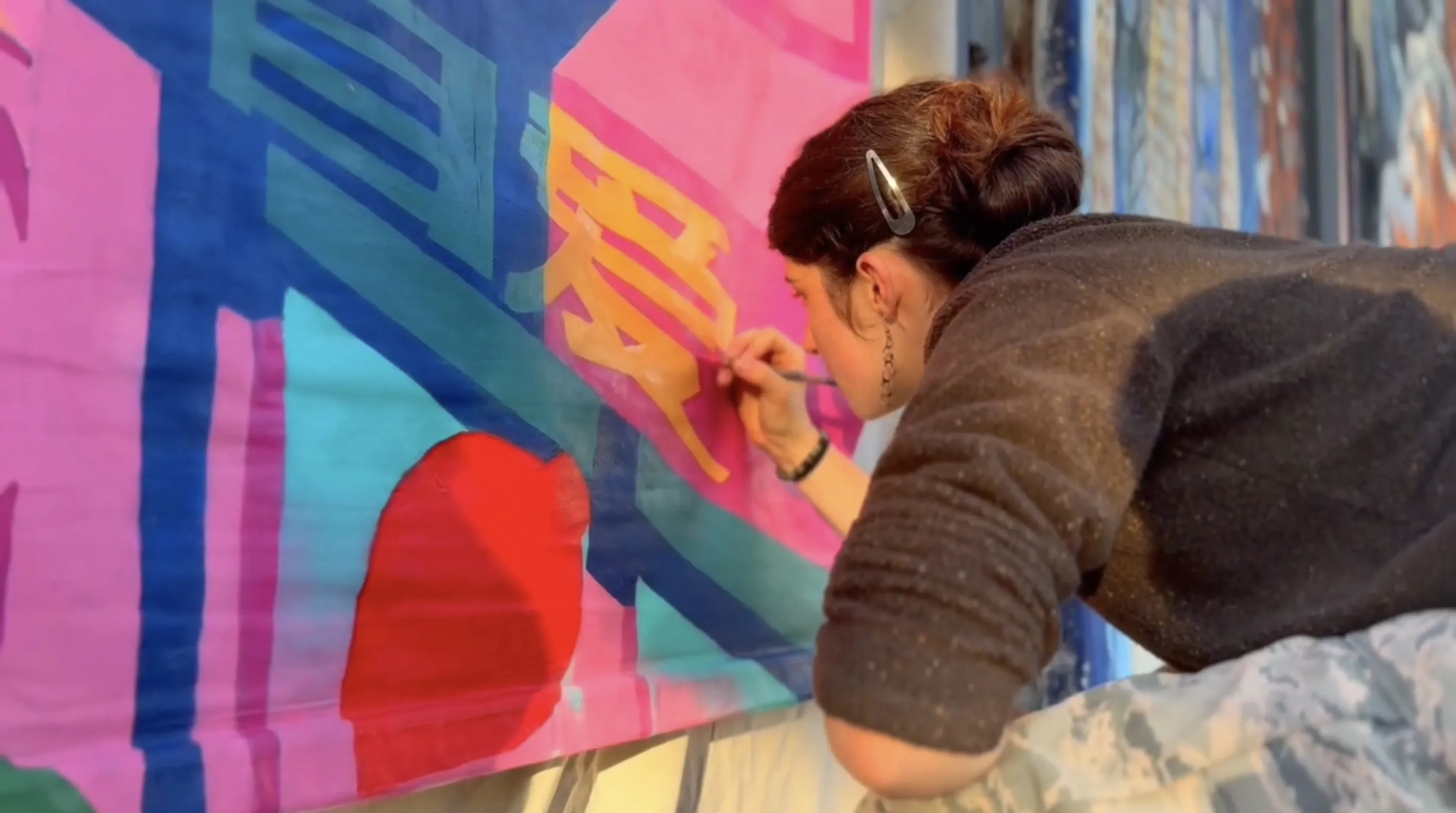
For DrawBridge, this partnership represents something we've always believed but haven't always had the infrastructure to act on: that our programs are most powerful when they're part of a broader ecosystem of support. We create a consistent, safe, creative foundation. And when a child needs more, there's now a pathway, in the same space, with people they already know, without requiring families to navigate yet another referral or waitlist.
For children who need more, the Dominican partnership creates a bridge to deeper, arts-based therapeutic support, delivered by trained clinicians, in the same familiar settings, connected to the same communities. And for the site staff and social workers who hold it all together, it means having a partner with both the programming and the clinical capacity to support the children in their care.
This is what 37 years of listening has taught us: children don't need us to choose between creative expression and clinical care. They need both, and they need them woven together, in their communities, by people who show up consistently and pay attention to what each child actually needs.
DrawBridge's partnership with Dominican University of California is supported by the generosity of DrawBridge donors and the commitment of both institutions to advancing trauma-informed practice for children and youth.
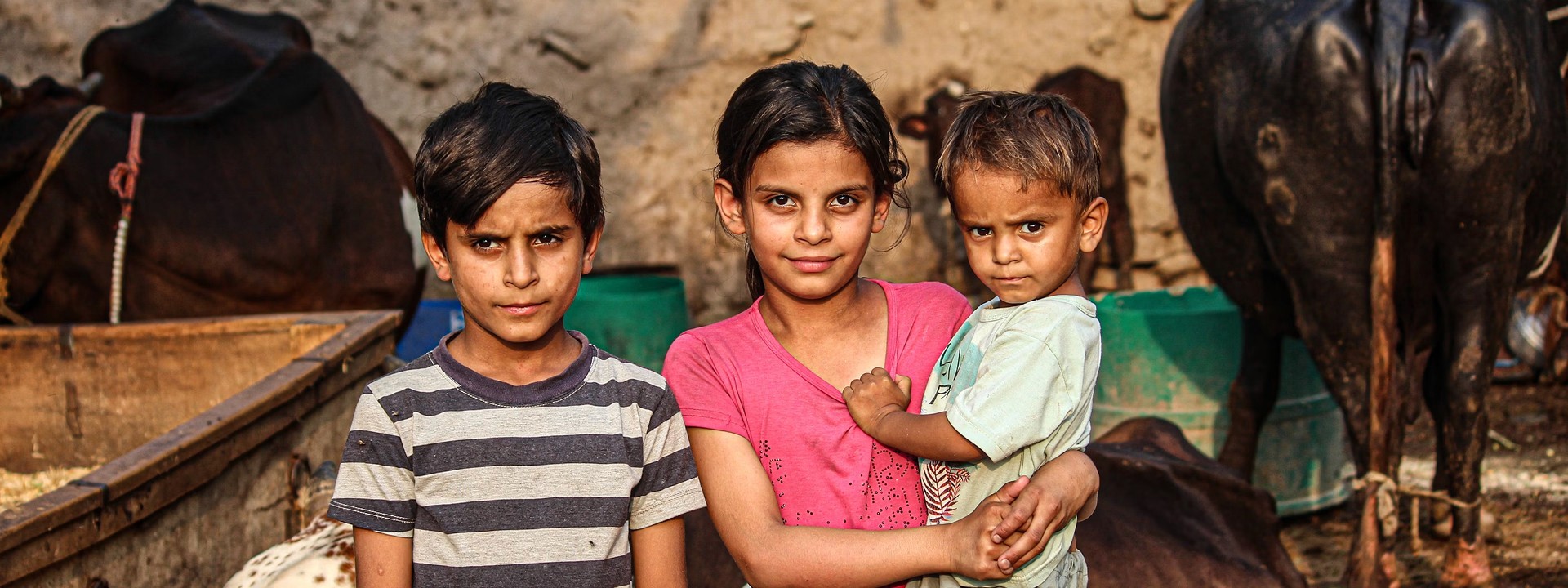
The donation program helped me in many ways send my children back to school with renewed hope and rebuild our home after the flood — Aisha Khan, Pakistan
How you can contribute
Your support can make a world of difference. By choosing to donate, volunteer, or advocate for those in need, you help transform lives and strengthen communities. Monetary donations provide immediate relief, while volunteering your time or sharing skills creates long-term impact. You can also raise awareness by organizing community fundraisers or encouraging others to give. Every act of generosity, no matter the size, helps create a ripple effect of kindness that reaches far beyond its starting point.
Services and programs offered
Our donation-driven programs are designed to meet urgent needs and foster sustainable growth. From educational scholarships and medical assistance to food distribution and housing support, these initiatives aim to uplift individuals and families facing hardship. Beyond immediate aid, we also focus on empowering people with tools and knowledge to build a better future. Together with our donors and partners, we are turning generosity into lasting transformation.
Ways to Get Involved
- Sponsor a child’s education or healthcare needs.
- Support community rebuilding and food security programs.
- Volunteer your time for donation drives and awareness campaigns.
Conclusion
Every donation is more than just a gift, it’s a lifeline that restores hope and rebuilds futures. Through collective generosity, we continue to transform lives daily and create stronger, more resilient communities. Your kindness fuels progress and brings light to those in need. Together, we can make compassion go further and ensure that every contribution continues to change the world, one life at a time.